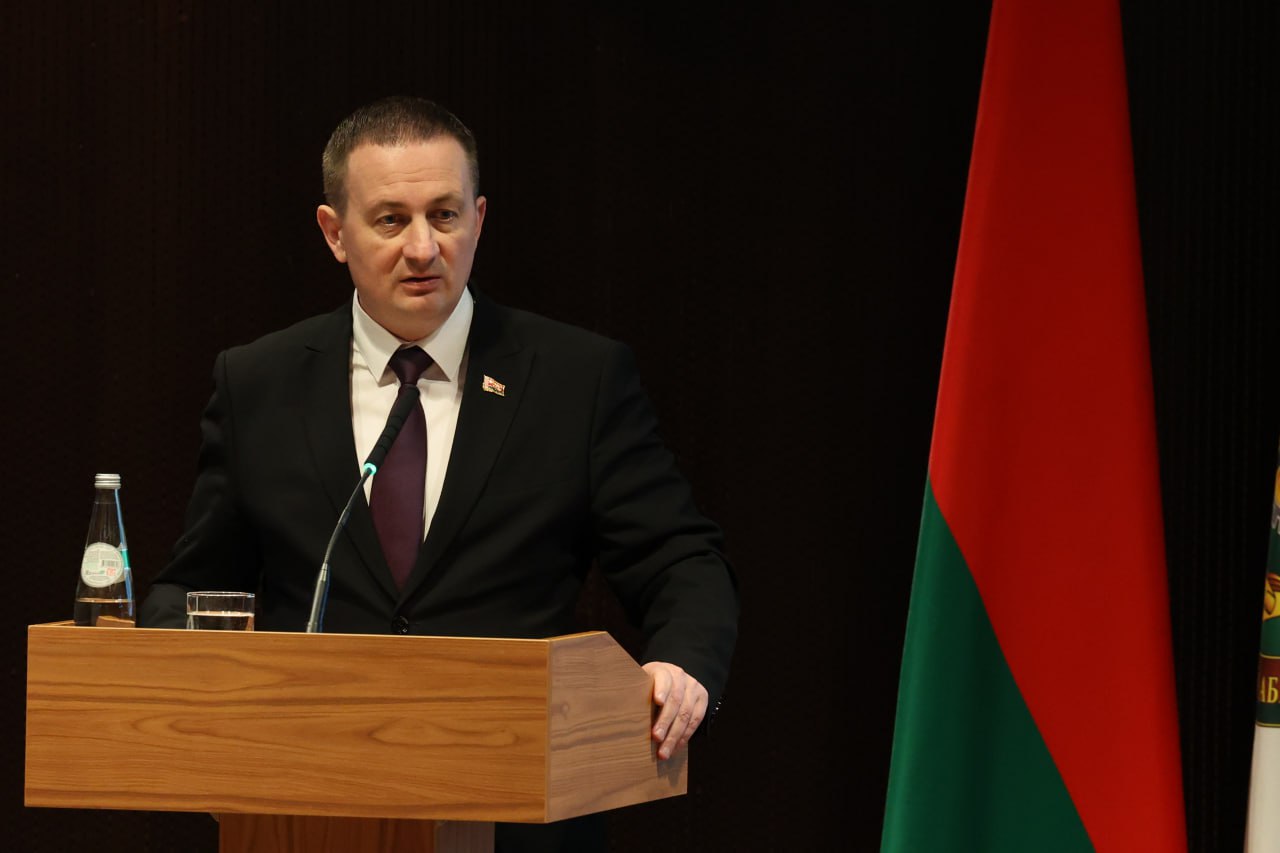
Belarusian Prime Minister Aleksandr Turchin participated in the final board meeting of the Ministry of Labor and Social Protection.
Board members reviewed the ministry’s performance in 2025 and discussed plans for 2026. “We need to develop a clear workforce management strategy. It’s a complex issue that includes engaging with all categories of those not participating in the economy. Each category requires its own approach,” Aleksandr Turchin noted.
The workforce management strategy also includes creating a carefully considered mechanism for attracting workers, including foreign workers, with due regard to economic efficiency and organizational and social implications. Additionally, it involves developing ways to address staff shortages and ensure the rational distribution of personnel.
“In the current demographic conditions, the need to ensure effective use of available labor resources comes to the forefront. Together with the Education Ministry, we must take regulatory and incentive measures to ensure rapid integration of university and college graduates into the workforce,” the Prime Minister emphasized.
Optimizing qualification requirements remains a key task for the Ministry of Labor and Social Protection, primarily their update in the context of a changing labor market. “Qualification requirements for white-collar and blue-collar jobs must be brought into line with the real needs of the economy,” the Head of Government stated.
Regarding labor standardization, Aleksandr Turchin pointed out that it is still fragmented rather than systemic, both in terms of how comprehensively the ministry regulates it and how often these standards are reviewed. “Here it would be good to see a real result from the Research Institute of Labor,” he said. It was further observed that efforts to introduce uniform cross-sectoral labor standards for technical personnel have not been completed since last year. The ministry’s task as a regulator is not merely to issue these standards, but to ensure their implementation.
The Head of Government emphasized that the Ministry of Labor and Social Protection should act as the regulator of the salary system, and salary growth should depend on labor efficiency rather than external factors.
Speaking about the state program Development of Demographic Potential for 2026-2030, the Prime Minister stated that the ministry is its main executor. “The most important thing at the moment is to identify the points we can actually regulate to stimulate birth rates and influence the mental attitudes and behavioral patterns of young people,” Aleksandr Turchin said.
The meeting also addressed the need to increase the targeting of social assistance. The Head of Government particularly emphasized the issue of bureaucratic procedures that people in need of social services have to face.
Regarding digitalization, the meeting highlighted the need to accelerate the digitization of the state benefits and pensions system. “The benefits for citizens, government agencies, and businesses are enormous. People won’t need to collect piles of papers and go from office to office. The system itself will register, for example, a child’s birth and automatically initiate benefit payments. That means an end to bureaucracy and millions of man-hours saved. Digitalization unlocks a huge amount of time, cuts costs across the country, and makes life easier for our people,” Aleksandr Turchin said.