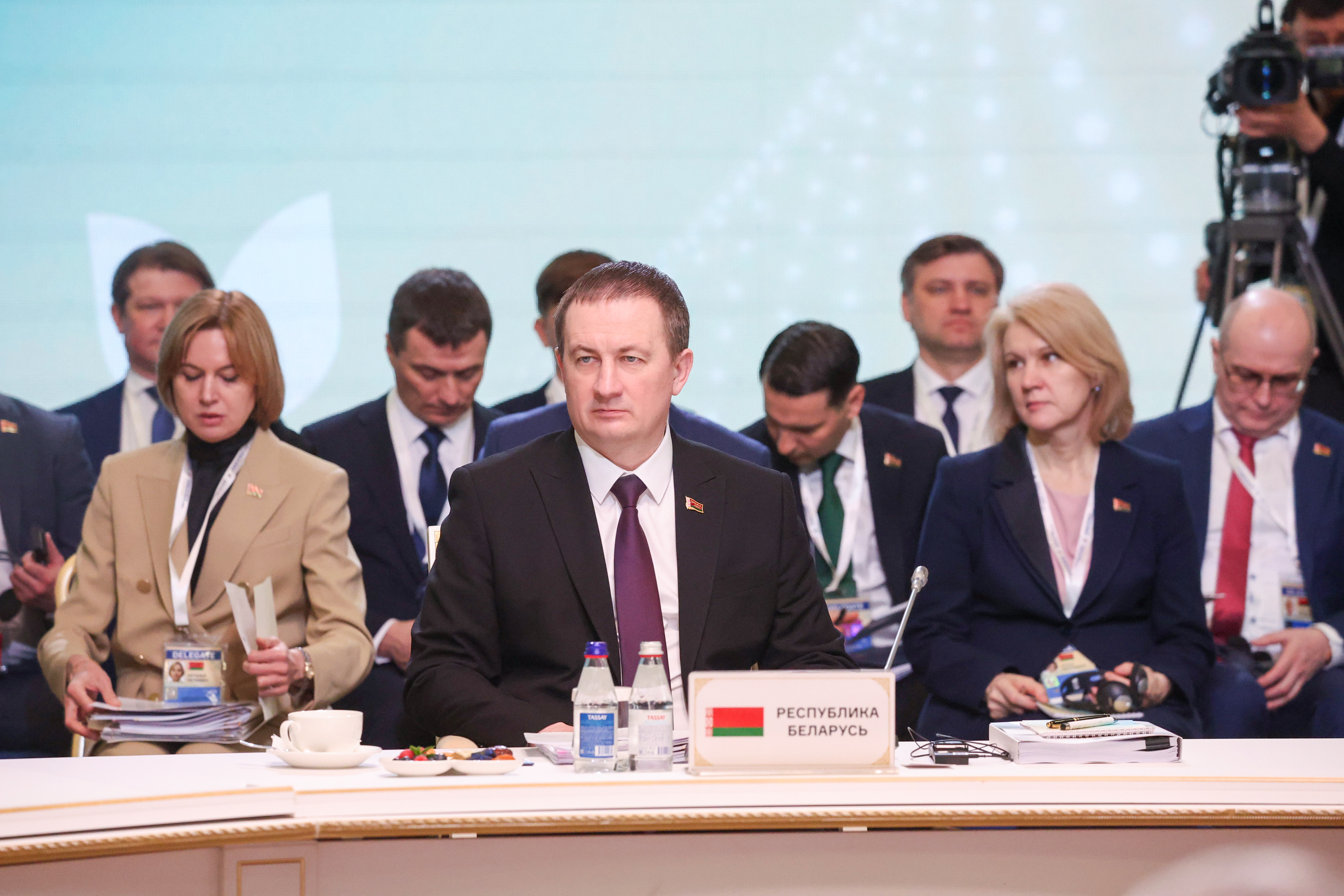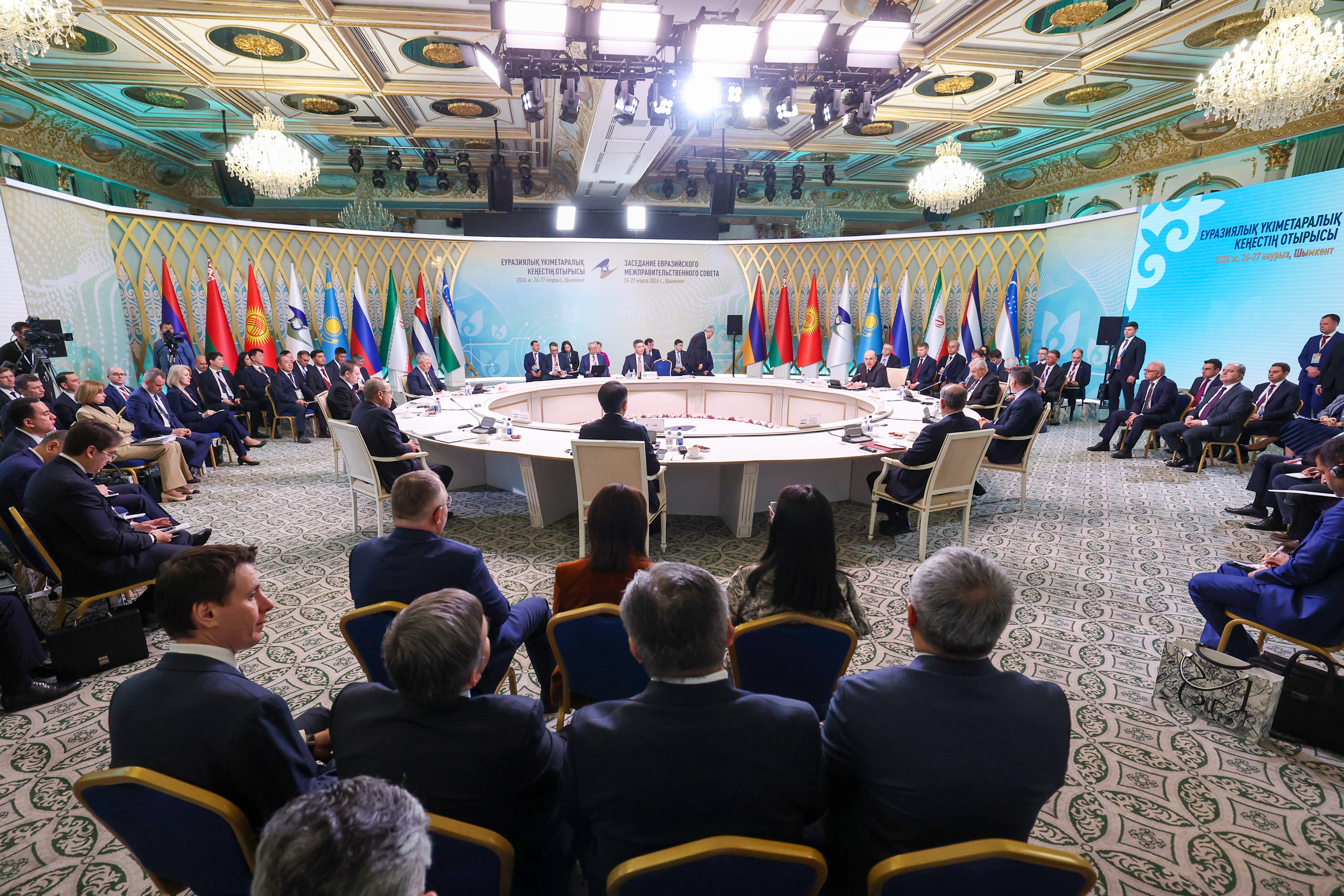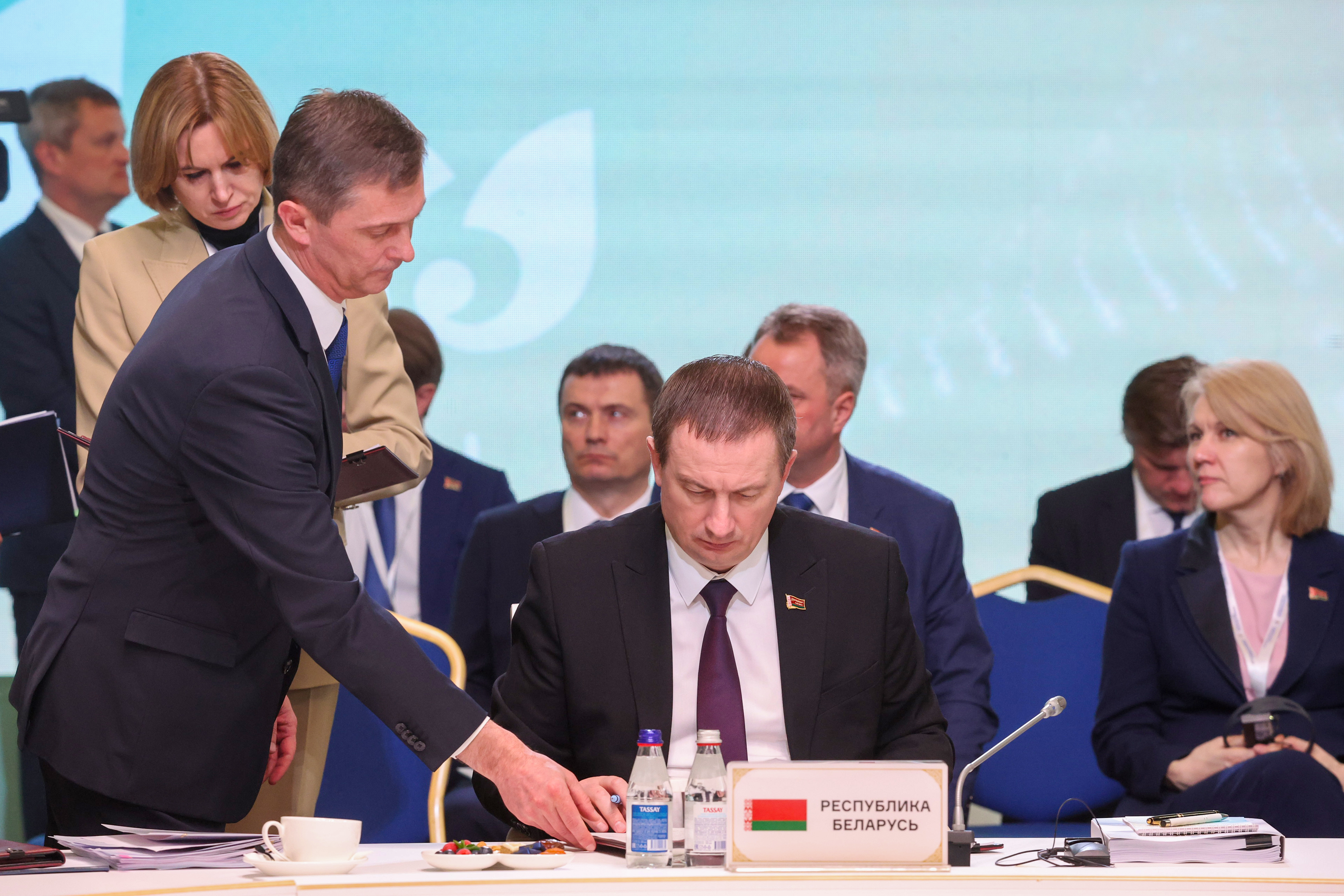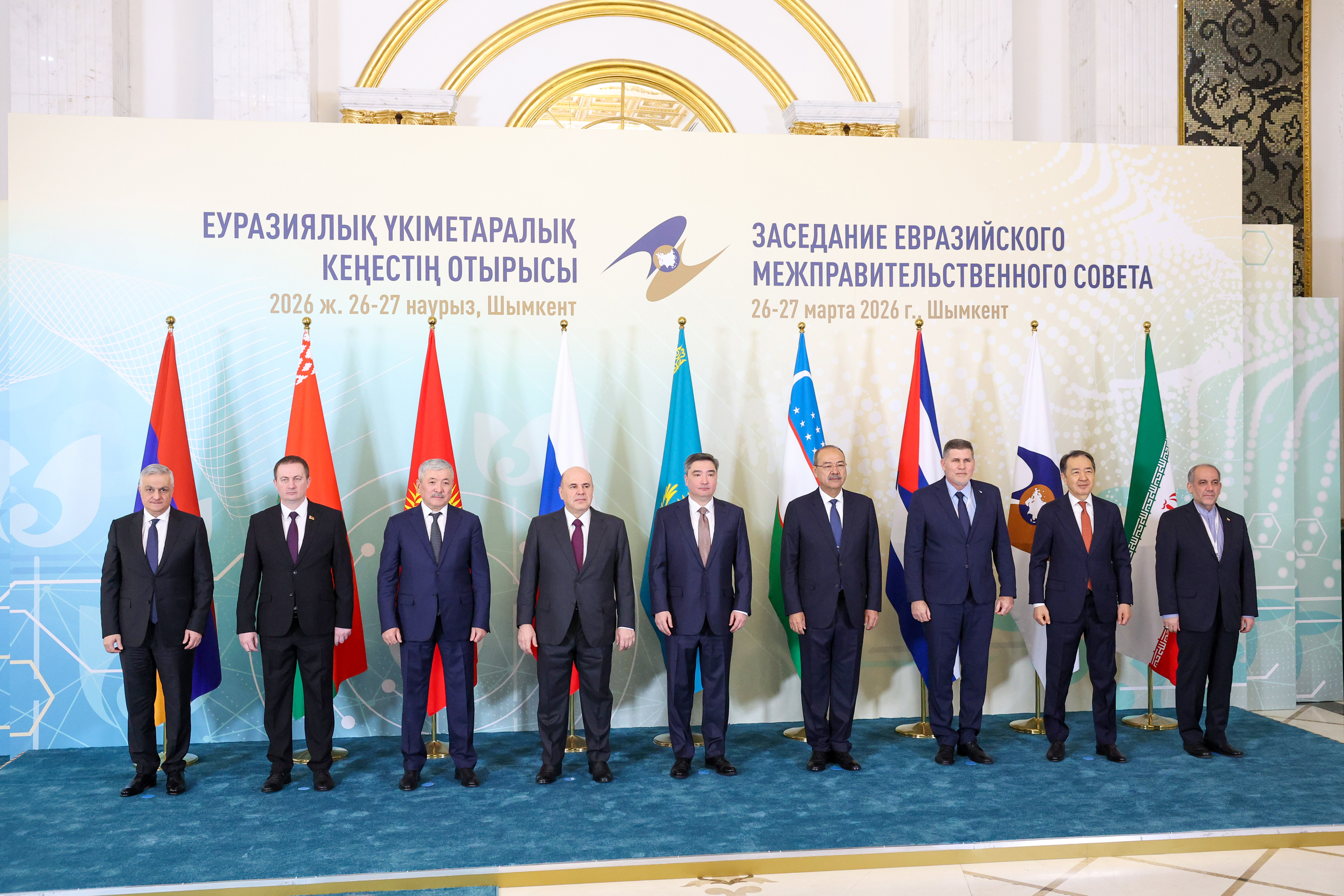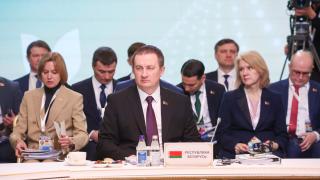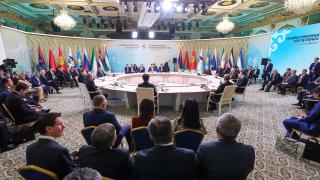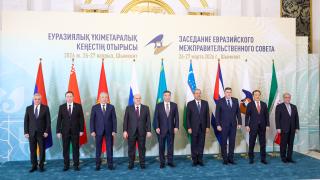
Belarus is committed to active joint work on advancing Eurasian integration, Belarus’ Prime Minister Aleksandr Turchin said during the expanded-format meeting of the Eurasian Intergovernmental Council in Shymkent (Kazakhstan) on 27 March.
“Belarus is focused on active joint efforts to further Eurasian integration. Our meeting is taking place during an acute phase of turbulence in the global economy, or rather, yet another phase. This once again underscores the value of our unity within the EAEU and the need to continue building it. The Eurasian Economic Union must remain a reliable platform ensuring stability and steady economic growth for our countries, and serve as a strong beacon of economic pragmatism for others. It is important to preserve the main achievement of Eurasian integration: a capacious internal market without borders, restrictions, or excessive protectionism, supported by production capacities and a comprehensive resource base,” Aleksandr Turchin said.
In his view, aspirations for closer cooperation are no longer sufficient. “The geopolitical context forces us to look at the tasks of regional economic integration from a somewhat different angle. It is necessary to ensure the socio-economic development of our countries in a way that can sustainably withstand a wide range of external challenges amid the growing fragmentation of the global economy. This strategic vision was formulated by the leaders of our states in the EAEU Treaty. In this regard, we expect the prompt start of coordinated, streamlined, and results-oriented work within the EEC [Eurasian Economic Commission] across all priorities outlined in the plan for implementing the declaration on the further development of economic processes within the EAEU,” the Prime Minister emphasized.
Prime Minister outlined practical steps for advancing the EAEU as a significant global economic center of attraction.
“It is clear that implementing the ambitious plans to develop the EAEU as a major economic center of attraction in the world is impossible without a proactive approach to the international positioning of our union. Systematic work must continue to expand the list of countries with which EAEU member states develop cooperation on the principles of free trade. The practical implementation of trade agreements concluded with our partners (Vietnam, Serbia, Iran, Mongolia, the United Arab Emirates, and Indonesia) must remain under the constant and special oversight of the EEC [Eurasian Economic Commission],” Aleksandr Turchin said.
In his view, the EAEU should not stop at what has already been achieved; it must actively engage partners in Asia, Africa, the Arab world, and Latin America. “We should not turn away from those who are interested in building constructive cooperation,” the Prime Minister emphasized.
“At the same time, while projecting our interests toward more distant regions, it is important not to overlook our closest neighbors in the CIS. We need to finalize the action plan for 2026-2030 to implement the Memorandum on deepening cooperation between the Eurasian Economic Commission and the CIS Executive Committee. I propose completing this on the sidelines of the Supreme Eurasian Economic Council and the Eurasian Economic Forum in May of this year,” Aleksandr Turchin noted.