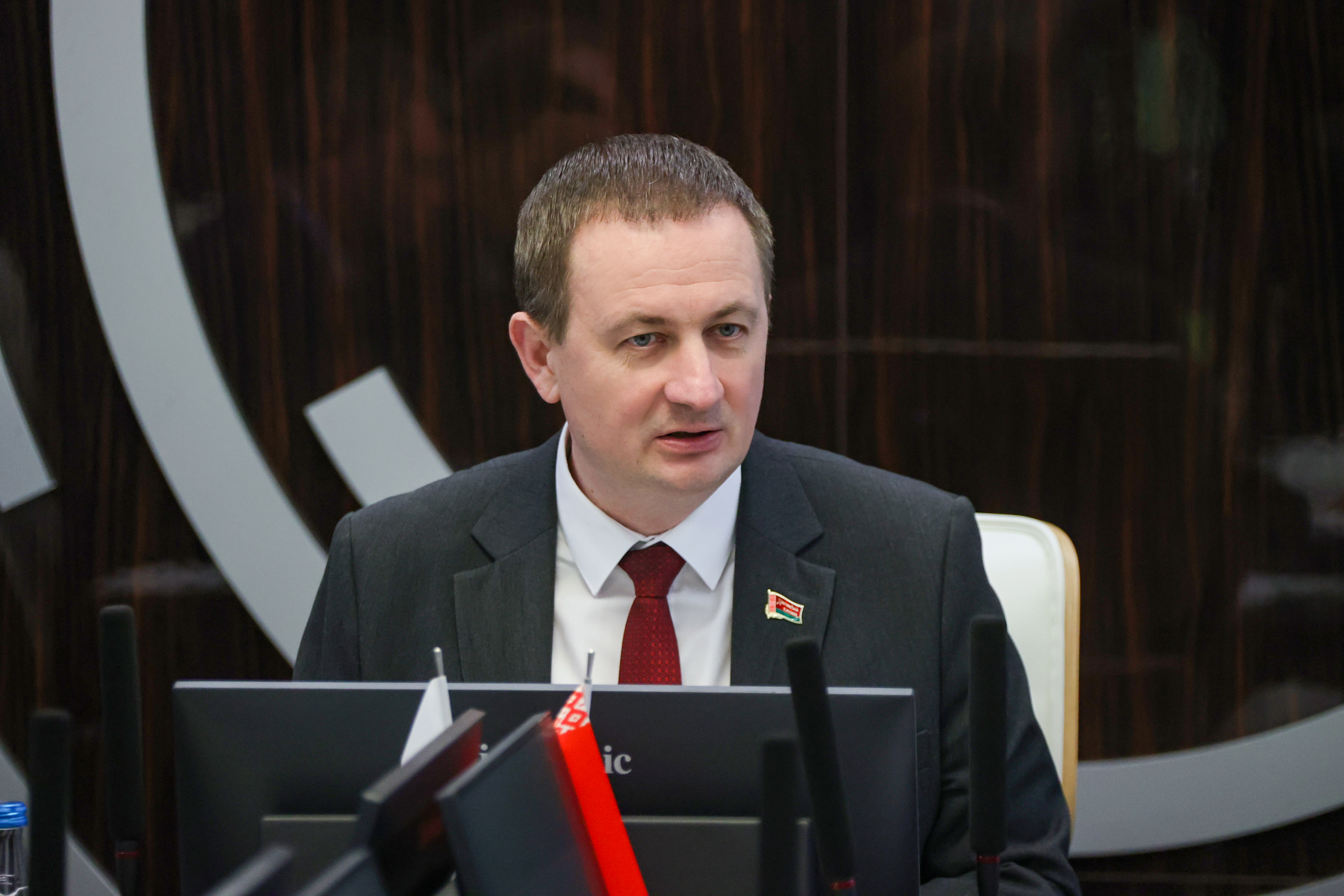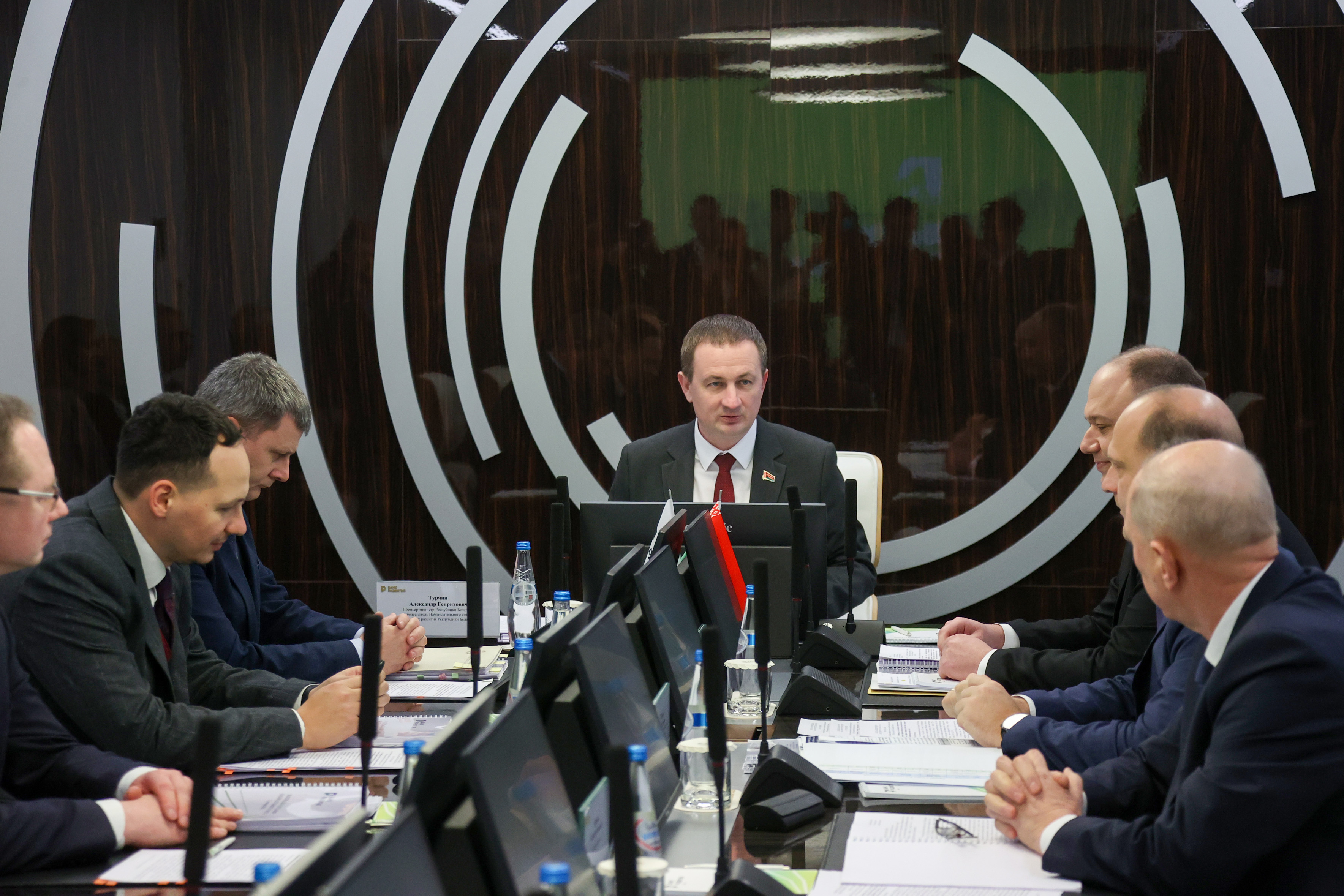
The strategic plan of the Development Bank of Belarus through 2030 must be aligned with the priorities and objectives of the five-year program for social and economic development, Belarusian Prime Minister Aleksandr Turchin said during a meeting of the supervisory board of the Development Bank of Belarus.
“Today, we are holding the final in-person supervisory board meeting this year. The most important issue today is the strategic plan for 2026-2030 of the Development Bank. Last week, a large-scale event took place – the session of the Belarusian People’s Congress, which adopted the program for social and economic development for 2026-2030. Our strategy must be clearly aligned with this program. We will review this document today. We need to understand our goals, objectives, and priorities. Today, the Development Bank is an instrument of the government, which is primarily responsible for the country’s development,” Aleksandr Turchin said.
Chairman of the Board of the Development Bank Sergei Stolyarchuk emphasized that the bank’s new strategy is indeed fully integrated into Belarus’ program for social and economic development in 2026-2030. “The Development Bank provides the necessary tools to achieve the goals set by businesses in various sectors. We announce an updated product line to support investment projects. What can we offer? This includes support for tourism: we have a product that allows for financing projects for up to 15 years at an annual rate of 6%. Also, there is a product for supporting promising industrial productions such as biotechnologies, unmanned aerial vehicles, and, of course, robotization. The Development Bank will also play a significant role in digitalization and creating a platform to support small and medium-sized enterprises. In general, the total volume of economic support across all areas of activity will exceed Br40 billion,” he noted.
Strategic cooperation with Russia focuses on supporting and promoting Belarusian products through state corporations and regional centers of the Russian Federation. The latest project involved financing the delivery of over 100 MAZ buses to Saint Petersburg.
“The share of Russian components in tractors and BelAZ trucks exceeds 50%. This creates opportunities for cooperation with the Russian Export Center and banks of the Russian Federation to support jointly manufactured products not only in Russia but also in third countries. That is, by essentially financing engineering products consisting of Belarusian and Russian components, we support the export of both Belarus and Russia. Therefore, relevant joint instruments with development institutions of the Russian Federation will be introduced. Financial support tools allow, first and foremost, to become more competitive in foreign markets and to reach distant countries in Latin America, Africa, and the Asian region,” Sergei Stolyarchuk stated.
The results of the five-year period were also summarized today. “In 2025, the implementation of our strategic plan for the five-year period will be completed. We already see that all tasks set by the supervisory board have been fulfilled and even overfulfilled by 30%,” Sergei Stolyarchuk said. In other words, the total volume of financial support over the five-year period exceeded the planned amount by one-third.
During this five-year period, the Development Bank was very active in implementing regional programs and import substitution programs. The number of export-oriented and efficient commercial projects increased almost fivefold and eightfold, respectively. The share of Belarusian export products financed by the bank nearly tripled. “The Development Bank now acts as the primary engine driving export support. We have also tripled the number of target countries for our export financing,” the chairman of the Board of Belarus’ Development Bank noted.
There are over 5,000 efficient projects to support small and medium-sized enterprises. The contribution of SMEs financed by the bank to the total revenue of the sector increased 1.5 times, and to the total employment in the sector - 2 times.