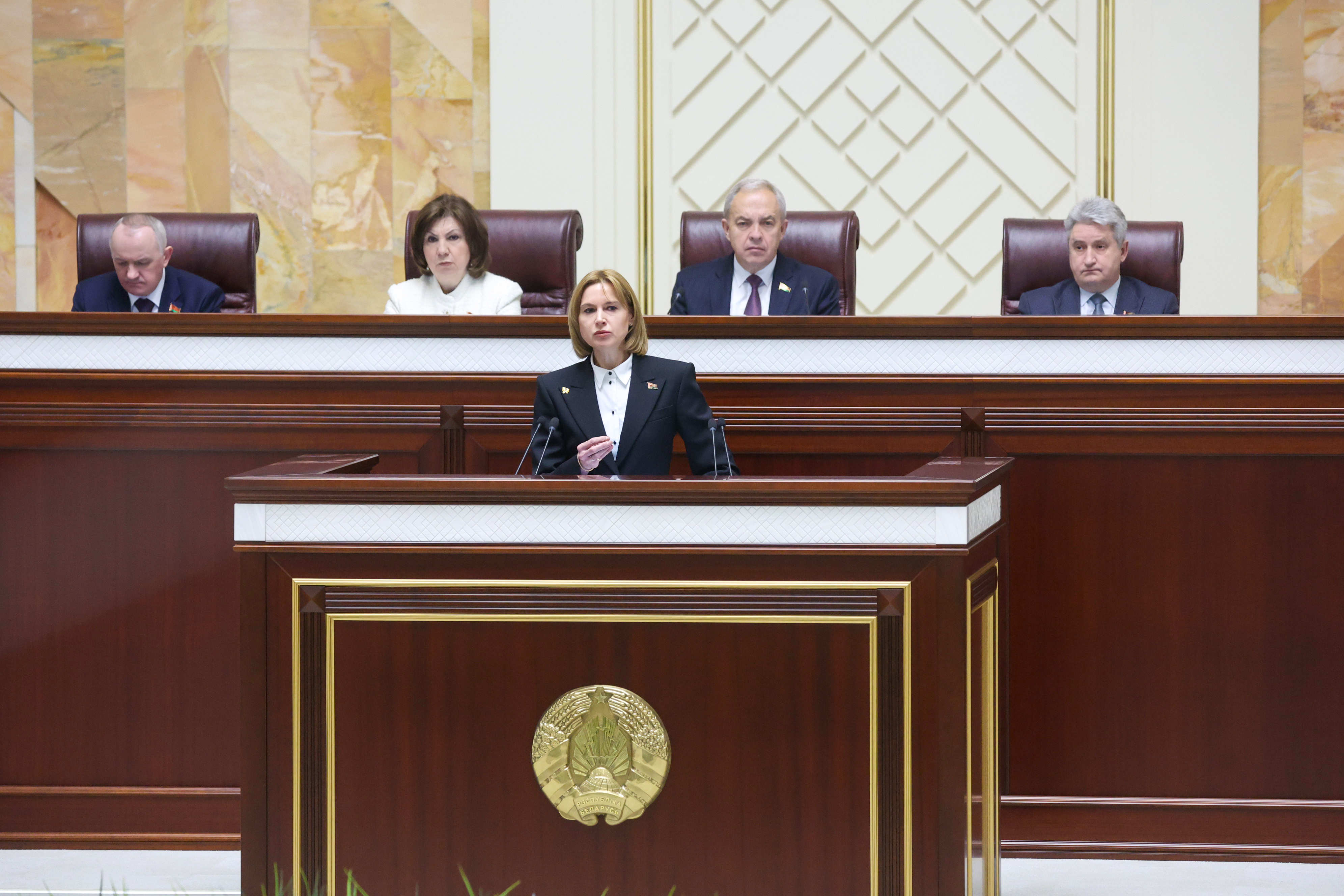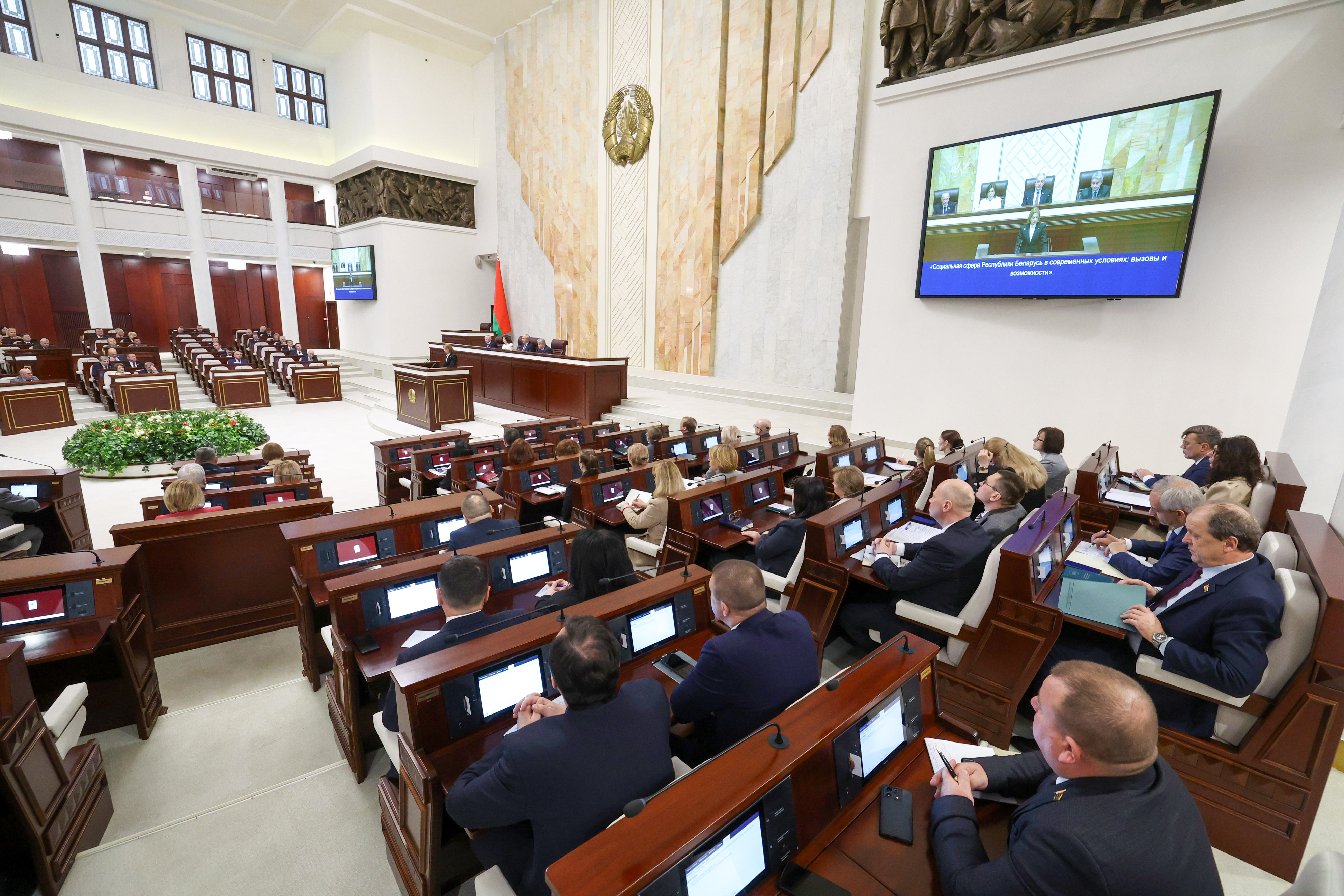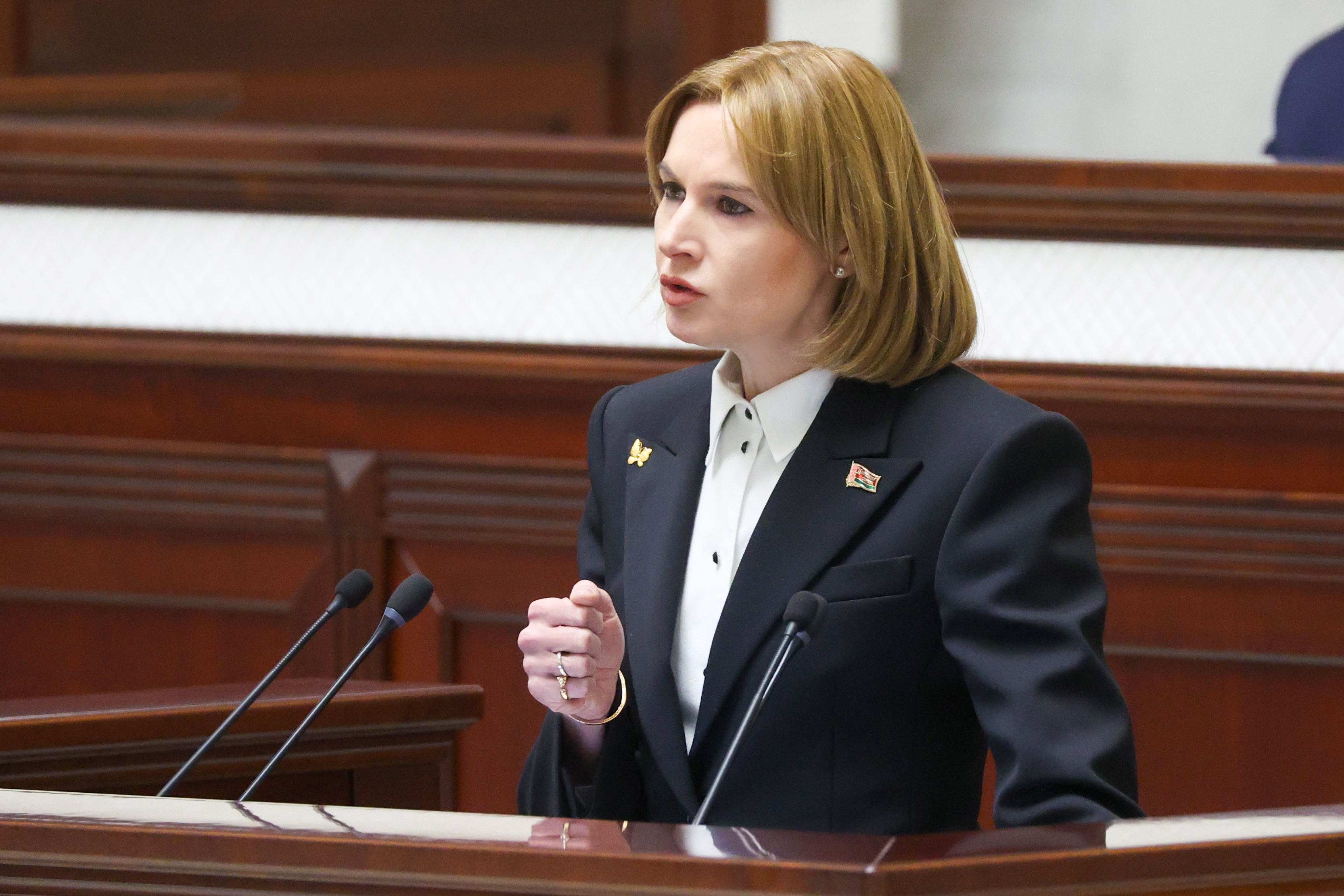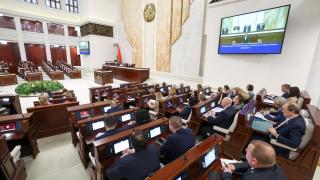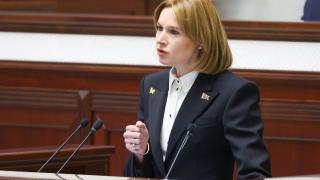
The Belarusian Government is working on modernizing the child care benefit system, Deputy Prime Minister Natalya Petkevich said during a joint sitting of the two houses of the Belarusian parliament in Minsk on 21 January.
"The Belarusian Government is working on modernizing the child care benefit system to reduce the risks of a deterioration in the financial situation of women compared to what they had before the birth of a child to ensure a decent level of financial well-being for our mothers,” Natalya Petkevich said. When talking to journalists, the Deputy Prime Minister explained that work is currently being finalized on new approaches for determining the amounts and procedures for child care benefit payments. The first goal is to stimulate the demographic situation and reduce the risks of mothers fearing a loss in their level of financial security compared to the income they received during their employment. "Secondly, to reduce the risks that any active woman faces, namely being excluded from economically active life during the period of childcare leave,” Natalya Petkevich noted.
According to her, certain approaches have already been formulated, approved by the head of state, and will soon be presented in the form of draft legal acts.The Deputy Prime Minister recalled that the Family Capital program has been extended until 2029. It has proven effective and in demand, maintaining the number of large families at around 120,000, and therefore will be continued. In Belarus, as of 1 January, over 150,000 Family Capital deposit accounts have been opened for large families.
“We analyze the requests of large families regarding the use of Family Capital funds and strive to respond to them positively," Natalya Petkevich noted.
In addition to financial incentives, as emphasized by the Deputy Prime Minister, attention is being paid to the crucial task of creating comfortable conditions for parents to care for their children. This involves establishing a network of nursery institutions for young children regardless of the parents' place of residence, whether urban or rural. Thanks to this, mothers will be able to return to work sooner, for example. The program for developing the network of nursery preschool institutions is currently being formulated by the Education Ministry.
Furthermore, the Deputy Prime Minister emphasized the importance of a robust and consistent information strategy aimed at fostering correct family values. She highlighted that behavioral patterns are formed from an early age, and this issue must be addressed consistently and at the state level.
Speaking about the demographic situation, Natalya Petkevich noted that it is characterized by a range of demographic risks, both objective and subjective. As in most countries, Belarus is experiencing population aging, a decline in the intensity of first and second child births, and shifts in the age model of fertility. The phenomenon of so-called “delayed motherhood” is already a growing trend.
According to her, a surge in the birth rate can be expected around 2030, when the next generation of the baby boom becomes parents.
Continuing on the topic of birth rate, Natalya Petkevich noted that subjective factors, which reside in the minds of future young parents, are more challenging to address. This involves changes in certain values, particularly attitudes toward marriage. Both objective and subjective factors dictate the measures the state must take to overcome the demographic challenges facing Belarusian society, Natalya Petkevich believes.