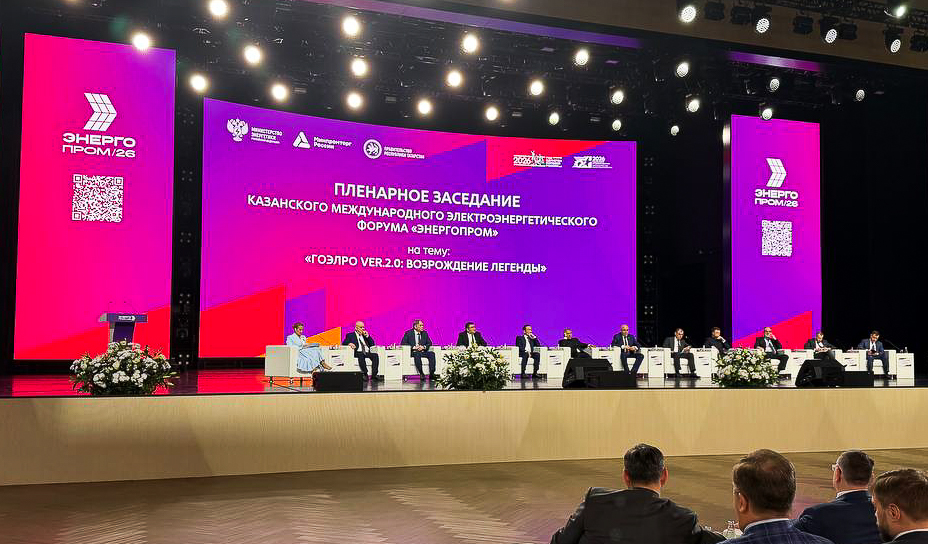
The Belarusian Nuclear Power Plant (BelNPP) is a key project for Belarus in the energy sector. Since the first power unit was connected to the grid, over 58 billion kWh of electricity have been generated, Belarusian Deputy Prime Minister Viktor Karankevich said at the plenary session “GOELRO ver. 2.0: Revival of a Legend” held as part of the Kazan International Electric Power Forum ENERGOPROM.
The project to construct the BelNPP has become a key one for the industry and the largest in the history of Belarusian-Russian relations. The NPP has not only enhanced the country’s energy independence but has also strengthened its technological and production potential in key sectors such as energy, industry, construction, medicine, science, and education.
“An entire industry has effectively been established: personnel have been trained, the requisite infrastructure has been put in place, and new capabilities have been mastered, not solely in the domain of nuclear energy but also in adjacent industries. Today, our scientific and engineering schools, as well as our design, planning, and construction organizations, possess experience and expertise that are valued both within the country and abroad,” said Viktor Karankevich.
“Since the first power unit was connected to the grid, the nuclear power plant has generated over 58 billion kWh of electricity. This has made it possible to replace approximately 16 billion cubic meters of natural gas. There has also been an environmental benefit - the total reduction in greenhouse gas emissions into the atmosphere has exceeded 30 million tonnes,” the Deputy Prime Minister said.
According to him, the strategic goals for Belarus’ energy sector are energy sovereignty and the sustainable, efficient development of the energy complex based on advanced innovative technologies. Thanks to the support of the Head of state, large-scale projects and programs have been implemented in the sector.
“In the last five-year period alone, 3,400 MW of modern generating capacity has been commissioned in Belarus, and 12,500 kilometers of electrical grids of various voltage classes have been built and reconstructed. Backbone substations have been modernized, and cutting-edge technologies have been introduced that make it possible to increase the reliability of power supply to consumers, reduce costs, and automate production processes. The level of digitalization of energy facilities has more than doubled,” Viktor Karankevich said.